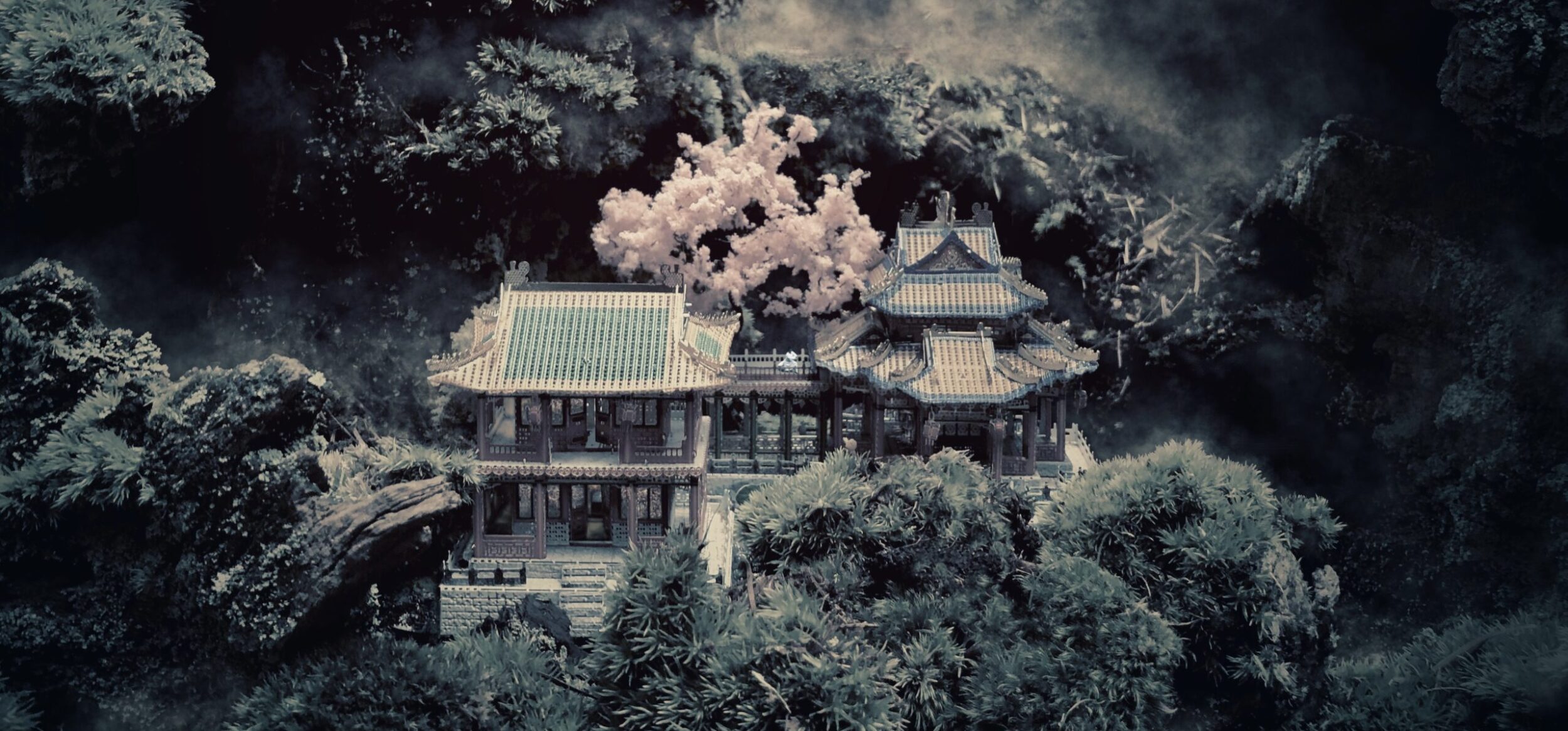
Any life, no matter how long or complex it may be, is made up essentially of a single moment – the moment in which a man finds out, once and for all, who he is.
Jorge Luis Borges
The great natural scale of Creatures goes back, through continuous metamorphoses, from man to stone. Since stone already contains the seed, the pictorial stone is nothing other than the primal configuration of the animate world.
Jurgis Baltrusaitis
Who but the most leaden-souled literalist can fail to be enchanted by the picture stone: uncannily arresting landscapes, sometimes plants, people or animals rendered so vividly and gracefully, not by the flourish of sable, but by the awesome and inexorable geologic gestures of untold millennia. If the earth itself is dreaming, then surely these lithic fragments represent stills from REM cycles measured not in ninety minute periods but in aeons. Ever ahead in matters petrophilic, the Chinese have long honoured these ‘dreamstones’, and fine specimens have been collected and admired since at least as early as the Tang dynasty (618-907CE). The most prized pieces were of marble freed by master ‘selectors’ from their petrified matrix in the Cangshan (Azure Mountain) range in Dali, Yunnan province. Framed in heavy lacquered mouldings and frequently seal stamped and scribed with poetic calligraphy, the close correspondence with classical brush painting in the great ‘rivers and mountains’ tradition was startling. Perhaps we will not venture beyond calling it suggestive that the Cangshan should yield such an infinite variety of marble images of itself as viewed from the middle distances. But our speculative musings are only stimulated the more on discovering the precise renderings of English country fields and poplar dotted hedgerows as rendered in Cotham marble from Bristol, the Bavarian Forest dendrites of Solnhofen and the famous pietra paesina, the Florentine ruin marble. In this latter are often discerned sweeping vistas of ruined Mediterranean cities, long emptied of human inhabitants and silently crumbling beneath the glare of an unforgiving Tuscan sun.
The craze for collecting Paesina stone reached its zenith during the seventeenth and eighteenth century amongst the aristocratic families of Europe. Specimens were inlaid to decorate fine furniture or exhibited amongst the skulls, astrolabes and taxidermy in cabinets of curiosity. Lacking the restraint and the cultivated reverence for the productions of nature of the Chinese artisan, European painters in their enthusiasm thought to perfect the petrified worlds by peopling them with a multitude of painted secular or religious figures, demoting the rocky striations to a mere stage set for the perpetual human drama. Adorned or not, large or finely patterned examples could fetch high prices, all the more so as the supplies of this already rare limestone dwindled as the few remaining quarries approached exhaustion. In another intriguing correspondence, the Cotham quarries are likewise long gone and even the great Cangshan suffered a similar fate as the art of the dreamstone was repudiated and the most beautiful stone paintings destroyed in the absurd orgy of self-harm that was the cultural revolution. Fortunately recent decades have seen a gradual reawakening of interest in the art form in China and for some, the mystical travels that it can invite.
Back in Tuscany, a handful of traders and artisans clung on – slicing, grinding, polishing and buffing the few remaining Paesine they could lay their hands on. A small stream of new rocks of the finest coloured variety continued to appear infrequently on the market, but the source for these remained cloaked in mystery – that is until the macabre discovery in the early 1970s of the body of an elderly man in a remote olive grove along with a knapsack chock full of rough Paesina stone. This man was Ferdinando Innocenti, aka ‘Il Rossino’ – last of a family of prospectors who has jealously guarded the secret of a hidden location where the paesina might be yet be unearthed. Rumour has it that Rossino took the greatest pleasure in identifying familiar, recognisable coastal locations etched in these venerable rocks – islands, sea stacks, castles. It was as if hundreds of millions of years before even the very places themselves has been formed, the eternal patterning of nature had in its boundless capacity anticipated forms and even events yet unknown. What strange and beautiful vistas of the future had Rossino glimpsed as he slowly turned that split, rough hewn stone in his wrinkled hands. And what manner of vision was he vouchsafed through his magnifying glass in that last fateful find that it left such an inscrutable blend of horrified recognition and perplexed wonderment etched forever upon his sunburnt features?
Disclaimer: performed by an artist. No rational or empirical worldviews were harmed in the creation of this work.